Conservative Party of Canada
Parti conservateur du Canada
Right-of-centre party formed in 2003 from the merger of the Canadian Alliance (founded 2000 as a successor to the Reform Party of 1987) and the federal Progressive Conservative Party (1942-2003). Stephen Harper led the merged party to government in 2006, winning re-election in 2008 and a majority in 2011. Lost government to Justin Trudeau's Liberals in 2015 and remained Official Opposition through 2015-2025 under Harper, Andrew Scheer (2017-2020), Erin O'Toole (2020-2022), and Pierre Poilievre (since September 10, 2022). Won the 2025 popular vote on the strength of an affordability and housing-supply campaign anchored by Bill C-356 (Building Homes Not Bureaucracy Act), but came up short of forming government. Currently the Official Opposition under Pierre Poilievre.
Leader

Pierre Poilievre
View full profile →
Positions on Issues
AI & Technology Regulation
The federal Conservative Party under Pierre Poilievre voted against the Artificial Intelligence and Data Act (the third part of Bill C-27 of 44-1 which died on the Order Paper), citing concerns about Industry Canada regulatory overreach and competitive harm to Canadian AI firms. Supports voluntary industry codes of conduct like the September 2023 Code of Conduct for Generative Artificial Intelligence Systems signed by Cohere, BlackBerry, Microsoft, OpenText, and others. Supports stronger CSE (Communications Security Establishment) oversight by NSIRA but opposes additional federal AI-risk legislation as duplicating existing Competition Act and Privacy Act frameworks.
Source ↗Affordable Internet & Digital Equity
The federal Conservative Party under Pierre Poilievre supports market-based competition over CRTC price regulation, advocates for expanded MVNO (Mobile Virtual Network Operator) access through market-led rather than regulated mechanisms, opposes the Liberal-NDP framing of the Big Three wireless carriers (Bell, Rogers, Telus) as oligopolistic, supports continued federal Universal Broadband Fund delivery toward 50/10 Mbps universal service by 2030 (the target announced in 2020 by the Trudeau government), and pushed for streamlined CRTC regulatory processes to enable faster network buildout. Critical of the Online News Act (Bill C-18, S.C. 2023, c. 23) for triggering Meta's block of Canadian news.
Source ↗Agriculture & Food Security
The federal Conservative Party under Pierre Poilievre voted in favour of Bill C-282 (Department of Foreign Affairs Trade and Development Act amendment, S.C. 2024, c. 9, royal assent June 13, 2024) preserving supply-management protections in trade negotiations, supports the Canadian Cattlemen's Association and the Dairy Farmers of Canada as economic constituencies, calls for federal funding under the Sustainable Canadian Agricultural Partnership (SCAP) 2023-2028 at $3.5 billion over five years to remain at current levels rather than expansion, supports Canadian agriculture exemption from federal carbon-pricing (currently the carbon-pricing-greenhouse-fuel-exemption framework applies to farm fuels), and pushes for faster federal Canadian-Food-Inspection-Agency approval timelines for new pesticide and animal-feed products.
Source ↗Arts, Culture & Heritage
The federal Conservative Party under Pierre Poilievre voted against Bill C-11 (Online Streaming Act, S.C. 2023, c. 8) and Bill C-18 (Online News Act, S.C. 2023, c. 23) citing concerns about CRTC overreach. Has called for the elimination of CBC English-language operations (Pierre Poilievre's 2023 commitment) while preserving Radio-Canada French-language operations; the current CBC/Radio-Canada parliamentary appropriation is approximately $1.2 billion annually with English operations representing roughly 60 percent. Supports continued federal funding for the Canada Council for the Arts, the Telefilm Canada program, and the National Film Board, but at maintained rather than expanded levels.
Source ↗Climate & Environment
The federal Conservative Party under Pierre Poilievre frames Canadian climate policy as prioritizing affordability and reliability over carbon pricing. Voted against the Greenhouse Gas Pollution Pricing Act (S.C. 2018, c. 12, s. 186) and supported its consumer-fuel-charge elimination (which Carney did in 2025). Supports technology-and-innovation approaches including the Carbon Capture, Utilization and Storage Investment Tax Credit, opposes the federal Clean Electricity Regulations 2035 net-zero target as unrealistic for Alberta and Saskatchewan, and rejects the Liberal-NDP framing of climate as the existential issue. Supports continued expansion of LNG exports as displacement of higher-emitting coal in Asia.
Source ↗Climate Adaptation & Disaster Response
The federal Conservative Party under Pierre Poilievre prioritizes practical climate adaptation over mitigation policy, calling for expanded federal flood-mapping (currently the Department of Natural Resources Canada flood maps cover only about 60 percent of populated Canada per the 2024 IBC report), increased Disaster Financial Assistance Arrangements funding to provinces (currently capped at $100 million per event), establishment of a national wildfire-fighting standing capacity (currently provincial responsibility under the federal disaster framework), and 50 percent federal cost-share on critical-infrastructure climate retrofits in the National Disaster Mitigation Program.
Source ↗Cost of Living
The federal Conservative Party under Pierre Poilievre frames the cost-of-living crisis as caused by the Liberal-NDP government's spending, the carbon tax, and the immigration intake outstripping housing supply. Calls for axing the carbon tax (the Trudeau government eliminated the consumer fuel charge in 2025 ahead of the planned April 1, 2025 increase), capping federal program spending growth at the rate of inflation plus population growth, expanding the GST/HST New Housing Rebate threshold (currently $450,000 since 1991 unindexed), and the Conservatives' For You Tax Cuts framework for low- and middle-income earners.
Source ↗Crime & Public Safety
The federal Conservative Party under Pierre Poilievre supported Bill C-48 (Bail Reform Act, S.C. 2023, c. 30, royal assent December 5, 2023, in force January 4, 2024) making reverse-onus on bail apply to certain repeat violent and weapons offences, voted against Bill C-5 (Mandatory Minimum Penalties reform, S.C. 2022, c. 15, royal assent November 17, 2022) which removed mandatory minimums for certain offences, opposes the Liberal-NDP framing of harm reduction over enforcement, calls for restoring mandatory minimums for serious violent offences, expansion of victim-impact-statement weight in sentencing, and stronger federal-Border-Services enforcement against firearms smuggling at the Canada-US border.
Source ↗Democratic Renewal & Electoral Reform
The federal Conservative Party under Pierre Poilievre supports the existing first-past-the-post electoral system (the CPC has historically benefited from FPTP's seat-vote-share gap especially in Western Canada), opposes proportional representation, supports the Canada Elections Act (S.C. 2000, c. 9) framework with limited reform, supports the public-inquiry-into-foreign-interference (Hogue Commission, final report January 2025), pushed for parliamentary review of the National Security and Intelligence Committee of Parliamentarians (NSICOP) outputs, and calls for stronger third-party-advertising disclosure under the existing Canada Elections Act.
Source ↗Digital Rights
The federal Conservative Party under Pierre Poilievre voted against Bill C-11 (Online Streaming Act, S.C. 2023, c. 8) and Bill C-18 (Online News Act, S.C. 2023, c. 23) citing concerns about CRTC overreach and federal interference with user-generated content. Supports voluntary industry self-regulation over federal regulatory mandates, opposes the proposed Artificial Intelligence and Data Act (AIDA, the third part of Bill C-27 of 44-1 that died on the Order Paper) as creating regulatory burden, and supports stronger CSE oversight by NSIRA. Has called for the elimination of CBC English-language operations (Pierre Poilievre's stated 2023 commitment, while preserving Radio-Canada French-language operations).
Source ↗Disability & Senior Care
The federal Conservative Party under Pierre Poilievre voted in favour of the Canada Disability Benefit Act (Bill C-22 of 44-1, S.C. 2023, c. 17, royal assent June 22, 2023) but has criticized the federal Liberal-NDP delivery of the benefit at $200 per month as inadequate, having promised in opposition to deliver a higher benefit. Supports expanded Old Age Security for seniors 65 to 74 to match the 10-percent boost that 75-plus recipients received in 2022 (Bill C-12 of 44-1, S.C. 2022, c. 5), the Registered Disability Savings Plan (RDSP) bonus expansion, and faster Veterans Affairs disability-claim processing (the AG's 2022 Report 2 found 47-week average vs 16-week target).
Source ↗Drug Policy & Harm Reduction
The federal Conservative Party under Pierre Poilievre opposes the BC decriminalization pilot (originally a three-year exemption under section 56 of the Controlled Drugs and Substances Act starting January 31, 2023; restricted to private homes in May 2024 by BC), calls for federal funding for residential addiction-treatment programs over harm-reduction-only frameworks (Pierre Poilievre's 2023 commitment to fund 50,000 treatment-program spots), opposes the prescribed-safer-supply expansion, and supports stronger federal-Border-Services enforcement against fentanyl trafficking at the Canada-US border (RCMP reported a 33-percent year-over-year increase in fentanyl seized at Canadian land borders in 2023).
Source ↗Economy & Jobs
The federal Conservative Party under Pierre Poilievre frames the Canadian economy as suffering from inflation (the 2022 peak at 8.1 percent year-over-year per Statistics Canada), capital flight (Canada's GDP per capita has grown approximately 0.7 percent annually 2015-2024 versus the US at 1.9 percent), regulatory burden, and the Liberal-NDP carbon-pricing framework. Calls for axing the consumer fuel charge of federal carbon-pricing (which the Carney Liberal government did in 2025), cutting capital-gains-tax inclusion rate (the Liberal increase to 66.7 percent for gains over $250K introduced in 2024 was rescinded by Carney), and reducing regulatory burden through the One-for-One regulatory removal commitment under the Red Tape Reduction Act (S.C. 2015, c. 12).
Source ↗Education
The federal Conservative Party under Pierre Poilievre treats education as primarily provincial jurisdiction under section 93 of the Constitution Act, 1867 and section 92(7) and 92(16). Supports continued federal student-loan interest at zero (a Liberal 2023 policy the Conservatives have not pledged to reverse), expansion of the Canada Training Credit for skills development (Bill C-19 of 44-1 implementation), Tax-Free Home Savings Account expansion (FHSA $8K annual + $40K lifetime), and opposes any federal direct delivery of K-12 program components. Calls for federal funding parity for francophone-minority and Indigenous on-reserve K-12 systems.
Source ↗Federalism & Quebec
Generally favours greater provincial autonomy, particularly on resource and energy policy. Supports allowing provinces to opt out of federal social programs with full compensation. Opposes federal use of the notwithstanding clause but does not advocate constitutional limits on provincial use.
Source ↗Foreign Policy & Defence
The federal Conservative Party under Pierre Poilievre commits to meeting the NATO two-percent-of-GDP defence-spending target by 2030 (Canada currently at approximately 1.4 percent per NATO data), faster procurement of the F-35 fleet (currently 88 aircraft, delivery 2026-2032), restoration of funding for the Royal Canadian Navy combatant surface vessels under the National Shipbuilding Strategy (15 vessels under the $84-billion Canadian Surface Combatant program), supports continued Canadian arms exports under the Defence Production Act framework, opposes the federal arms-export embargo on Saudi Arabia, supports Canadian recognition of the State of Israel alongside Palestine under a future two-state solution.
Source ↗Gender Equality & Reproductive Rights
Position is that abortion law is settled and a Conservative government would not legislate to restrict it. Many caucus members personally oppose abortion and have voted for private members' bills tied to the issue; the leader has committed to no government-introduced legislation.
Source ↗Healthcare
The federal Conservative Party under Pierre Poilievre signed the Conservative-Liberal-NDP joint motion 2023 in support of the $196 billion 10-year Canada Health Transfer increase (working-together framework), supports expanded credential recognition for internationally trained physicians (the bill is provincial responsibility under section 92(7) of the Constitution Act, 1867 but federal regulatory support helps), calls for the federal Pharmacare Act phase one (Bill C-64, S.C. 2024, c. 20) to remain limited to contraceptives and diabetes medications without expansion, and supports provincial autonomy over healthcare delivery including the Ontario Bill 60 private-clinic OHIP-funded surgical contracts.
Source ↗Housing
The federal Conservative Party under Pierre Poilievre frames the housing affordability crisis as caused by federal red tape, the carbon-pricing framework adding to construction costs, immigration intake outstripping supply, and Liberal-NDP government spending. Calls for the Building Homes Not Bureaucracy Act linking federal infrastructure funding to municipal building-permit-approval targets (proposed minimum 15-percent annual increases), elimination of the federal GST on new homes under $1 million, axing the consumer fuel charge of federal carbon-pricing (Carney did this in 2025), and the For You First-Time Home Buyer mortgage-deduction expansion. Opposes the Liberal Housing Accelerator Fund as overly bureaucratic.
Source ↗Immigration
The federal Conservative Party under Pierre Poilievre has called for a substantial reduction in temporary foreign workers (currently approximately 750,000 plus the Post-Graduate Work Permit cohort per IRCC 2024 data), a hard cap on international-student permits per institution and per province (which the Liberal government implemented at 360,000 in 2024 in a 35 percent year-over-year cut), faster credential recognition for skilled-economic-class immigrants in regulated professions, and stronger Border Services enforcement against asylum-seeker irregular crossings. Supports the Roxham Road closure that took effect March 25, 2023 under the Safe Third Country Agreement amendment.
Source ↗Indigenous Rights
The federal Conservative Party under Pierre Poilievre supports continued implementation of the 94 Truth and Reconciliation Calls to Action with concrete delivery rather than rhetoric, the Specific Claims Tribunal expansion to clear the backlog of over 200 pending Indigenous land-claim files, the First Nations Property Ownership initiative giving First Nations the option to convert reserve land to private fee-simple ownership (long-standing Conservative position not yet legislated), expansion of resource-revenue sharing with First Nations under the federal Indigenous Resource Sharing framework, and faster Specific Claims compensation timelines.
Source ↗Languages & Bilingualism
The federal Conservative Party under Pierre Poilievre supported Bill C-13 (Official Languages Act reform, S.C. 2023, c. 15) adding French-language-of-work rights in federally regulated workplaces, defends federal funding for English-minority communities in Quebec and French-minority communities outside Quebec, supports the Court Challenges Program for official-languages-rights litigation, the Action Plan for Official Languages 2023-2028 at $4.1 billion, and federal-government bilingualism-of-services requirements under section 25 of the Official Languages Act. Critical of the Liberal-government Bill C-13 interpretation that the Conservative caucus argues weakens English-minority protections in Quebec.
Source ↗Mental Health
The federal Conservative Party under Pierre Poilievre supports expanded community-based mental-health services as a frontline response to the toxic-drug crisis (Canada saw approximately 8,500 opioid-toxicity deaths in 2024 per the Public Health Agency of Canada, with British Columbia and Alberta the most affected), opposes safer-supply programs in their current form (the Smith UCP government in Alberta ended Alberta's prescribed-safer-supply program in 2024), supports increased funding for residential addiction-treatment programs over harm-reduction-only frameworks, and calls for transferring federal mental-health-policy capacity from Health Canada to a new agency under Public Safety Canada portfolio with a recovery-oriented mandate.
Source ↗National Security
The federal Conservative Party under Pierre Poilievre commits to meeting the NATO two-percent-of-GDP defence-spending threshold by 2030 (Canada currently sits at approximately 1.4 percent per NATO data), restoring funding for the Royal Canadian Navy combat surface combatant program, faster procurement of the F-35 fleet to replace the CF-18 (committed by the Liberal government in January 2023 with delivery by 2032-2034), increased Arctic-base presence including expansion of CFB Yellowknife and the new Nanisivik facility on Baffin Island, and a public inquiry into foreign interference (which the Hogue Commission delivered its final report on in January 2025).
Source ↗Northern & Arctic Sovereignty
The federal Conservative Party under Pierre Poilievre commits to meeting the NATO two-percent-of-GDP defence spending target by 2030 (Canada at approximately 1.4 percent per NATO data), expansion of the Joint Arctic Operations Centre, completion of the Nanisivik Naval Facility on Baffin Island (a Harper-era project still partially incomplete), faster procurement of the polar icebreakers under the National Shipbuilding Strategy (the John G. Diefenbaker still to be delivered 2030+), and Canadian rejection of US claims that the Northwest Passage is international waters rather than Canadian internal waters under the Arctic Waters Pollution Prevention Act (R.S.C. 1985, c. A-12).
Source ↗Public Transit & Infrastructure
The federal Conservative Party under Pierre Poilievre voted against the permanent Canada Public Transit Fund (announced at $3 billion per year starting 2026-2027) as overly bureaucratic, supports federal infrastructure funding tied to provincial-municipal accountability targets, opposed the federal-Ontario Eglinton Crosstown LRT funding under the Building Canada Fund as having gone over budget by approximately $4.8 billion versus the original 2010 estimate, supports completion of the Ontario Line subway under municipal-provincial-federal cost-share, and calls for full federal-provincial coordination on the Canadian National Railway and Canadian Pacific freight-rail capacity for the Asia-Pacific supply chain.
Source ↗Tax & Fiscal Policy
The federal Conservative Party under Pierre Poilievre frames Liberal fiscal policy as inflationary, citing the federal debt growth to approximately $1.4 trillion by 2024-2025 per the Office of the Parliamentary Budget Officer. Calls for a binding Pay-as-You-Go statutory rule requiring federal program spending to be offset by spending cuts elsewhere or revenue increases (the previous Conservative government tabled such legislation in 2014 but it lapsed), capping deficit growth, reducing capital-gains-tax inclusion rate (the Liberal increase to 66.7 percent for gains over $250,000 was rescinded by Carney in 2025), and expanding the Tax-Free Home Savings Account contribution limits.
Source ↗Veterans & Military Families
The federal Conservative Party under Pierre Poilievre has called for major reform of Veterans Affairs Canada disability-claim processing (the Auditor General's 2022 Report 2 found 47-week average vs the legislated 16-week target), full implementation of the Pension for Life framework introduced by the previous Conservative government's Veterans Well-being Act 2017 amendments, expansion of the Veterans Independence Program for aging-at-home benefits, restoration of the office of the Veterans Affairs ombudsman to pre-2014 capacity, faster mental-health-service waitlists at the federal Operational Stress Injury clinics network (currently 11 clinics nationally), and improved transition support for medically released CAF members.
Source ↗Workers' Rights & Labour
The federal Conservative Party under Pierre Poilievre opposed Bill C-58 (Anti-Scab Bill, S.C. 2024, c. 12, royal assent June 20, 2024) banning replacement workers in federally regulated industries (the bill passed 271 to 27, with the CPC the only major caucus opposed). Supports federal Right to Work legislation removing mandatory union dues collection (the Rand Formula codified in section 70 of the Canada Labour Code), reduced regulatory burden on small business under the One-for-One regulatory removal commitment, and provincial-jurisdiction primacy on labour standards. Federal-public-service-union opposition to Conservative platform commitments has been a recurring election issue.
Source ↗Youth & Future Generations
The federal Conservative Party under Pierre Poilievre frames the housing affordability crisis as the central youth-political issue, calling for federal pressure on municipalities to upzone (his proposed Building Homes Not Bureaucracy Act would have penalized cities not meeting building targets with reduced infrastructure funding), zero capital-gains-tax on RRSP withdrawals for first-home purchases, immediate elimination of the Underused Housing Tax for Canadian citizens, increases to the First Home Savings Account contribution limits ($8,000 annual, $40,000 lifetime), and federal student-loan interest-rate matching to Government of Canada bond rates (currently set at zero by the Liberals).
Source ↗
Members (34)
 CONSERVATIVE
Adam Chambers
Member of ParliamentSimcoe North
 CONSERVATIVE
Andrew Scheer
House Leader of the Conservative PartyRegina—Qu'Appelle
 CONSERVATIVE
Brad Vis
Member of Parliament
 CONSERVATIVE
Branden Leslie
Member of Parliament
 CONSERVATIVE
Clifford Small
Member of Parliament
 CONSERVATIVE
Damien Kurek
Former MP for Battle River-Crowfoot (Conservative)
 CONSERVATIVE
Dan Mazier
Member of Parliament
 CONSERVATIVE
Dean Allison
Member of ParliamentNiagara West
 CONSERVATIVE
Earl Dreeshen
Former Member of Parliament
 CONSERVATIVE
Eric Melillo
Member of Parliament
 CONSERVATIVE
Erin O'Toole
Member of ParliamentBeloeil—Chambly
 CONSERVATIVE
Frank Caputo
Member of Parliament
 CONSERVATIVE
Garnett Genuis
International Development CriticSherwood Park—Fort Saskatchewan
 CONSERVATIVE
Glen Motz
Member of Parliament
 CONSERVATIVE
Jasraj Singh Hallan
Finance CriticCalgary Forest Lawn
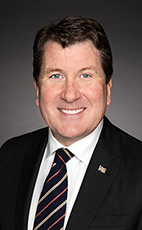 CONSERVATIVE
John Williamson
Member of Parliament
 CONSERVATIVE
Kerry-Lynne Findlay
Former Member of ParliamentEdmonton West
 CONSERVATIVE
Kyle Seeback
Member of Parliament for Dufferin-Caledon
 CONSERVATIVE
Larry Brock
Member of Parliament
 CONSERVATIVE
Leo Housakos
Senator (Conservative)
 CONSERVATIVE
Mel Arnold
Member of Parliament for North Okanagan-Shuswap
 CONSERVATIVE
Melissa Lantsman
Deputy Leader of the Conservative PartyThornhill
 CONSERVATIVE
Michael Chong
Foreign Affairs CriticWellington—Halton Hills
 CONSERVATIVE
Michelle Rempel Garner
Health Critic
 CONSERVATIVE
Pierre Paul-Hus
Industry Critic
- CONSERVATIVE
Pierre Poilievre
Leader of the OppositionBattle River—Crowfoot
 CONSERVATIVE
Rachael Thomas
Heritage Critic
 CONSERVATIVE
Rick Perkins
Former Member of Parliament
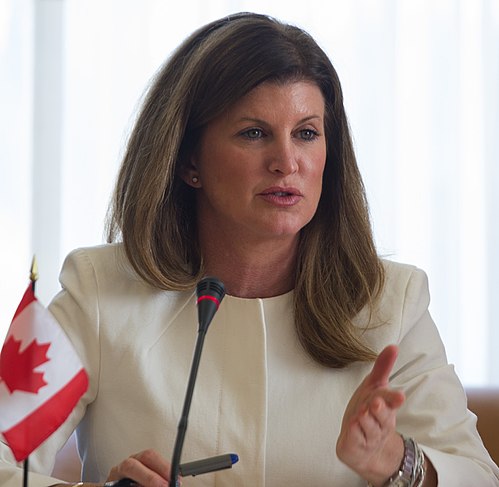 CONSERVATIVE
Rona Ambrose
Former Leader of the Opposition (interim)Regina—Qu'Appelle
 CONSERVATIVE
Scot Davidson
Member of Parliament for York-Simcoe
 CONSERVATIVE
Stephen Ellis
Former Member of Parliament
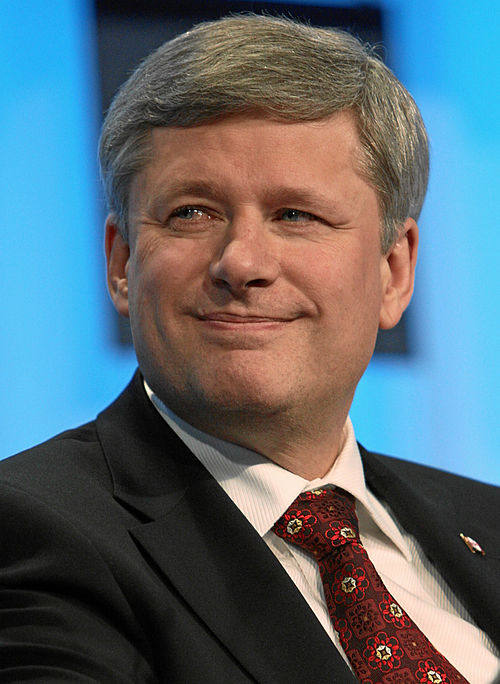 CONSERVATIVE
Stephen Harper
Former Prime Minister of Canada
 CONSERVATIVE
Tim Uppal
Deputy Leader of the Conservative PartyEdmonton Gateway
 CONSERVATIVE
Tracy Gray
Former Member of Parliament